

Building Stronger Families: Healing, Communication, and Support for Veterans
· 48m
0:0048:19
About this episode
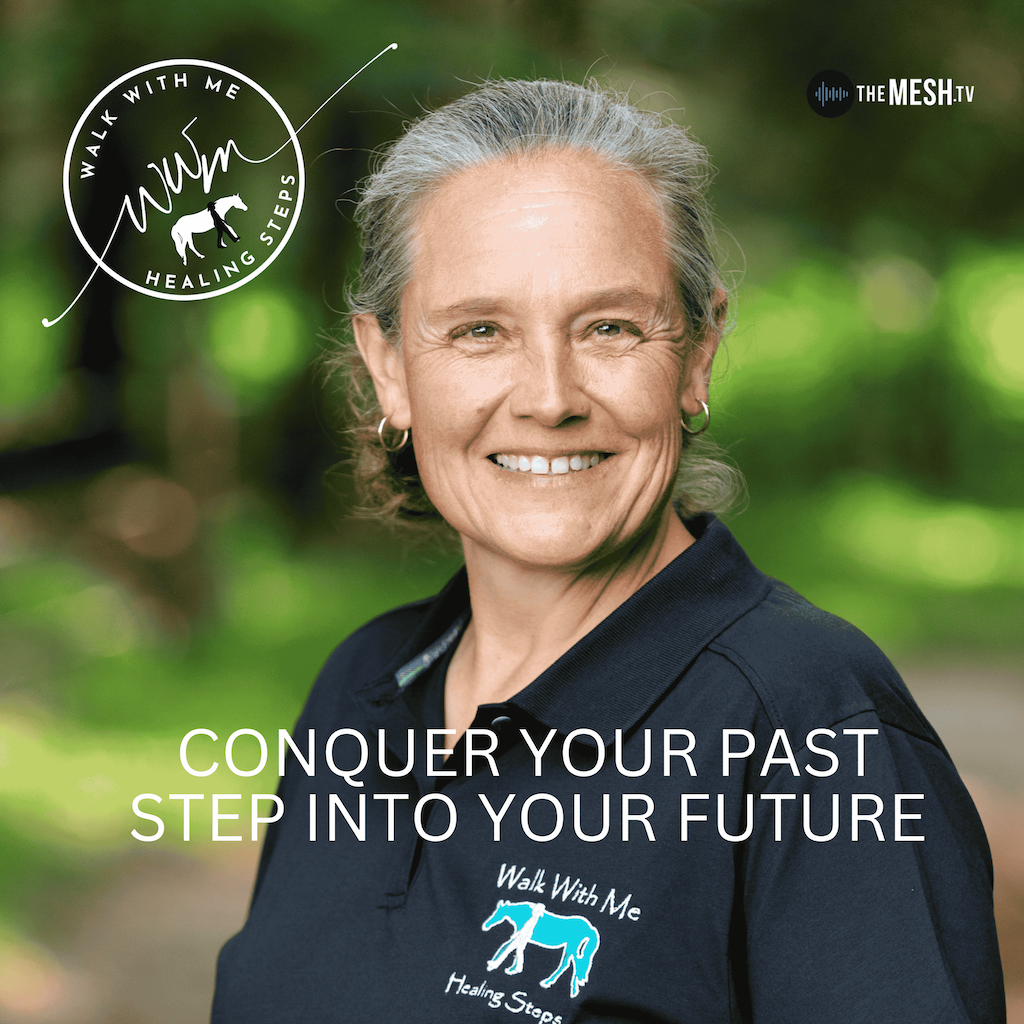
In this episode of Conquer Your Past and Step Into Your Future, Jennifer Bandy sits down with Joe to discuss the growing impact of Walk With Me Healing Steps and its veteran-focused programs. Together, they explore the importance of including spouses and families in the healing process, improving communication, setting healthy boundaries, regulating emotions, and learning how to pause before conflict escalates.
Joe also shares how the program has helped him navigate life after the military, strengthen his marriage, reconnect with his children, and lead with more grace in everyday situations. Jennifer and Joe discuss upcoming plans for new veteran cabins, spouse and couples workshops, open men’s and women’s groups, the September gala, and ways the community can support this growing mission.
#ConquerYourPast #StepIntoYourFuture #WalkWithMeHealingSteps #VeteranSupport #VeteranHealing #MilitaryFamilies #MarriageCommunication #HealthyBoundaries #EmotionalWellness #MentalHealthSupport #EquineTherapy #FamilyHealing #MensMentalHealth #CommunitySupport #HealingJourney
Transcript8,203 words — click to read
[00:00:02] What you want, when you want it, where you want it. This is The MESH. Welcome to Conquer Your Past and Step Into Your Future, a space for real people navigating real struggles, anger, overwhelm, broken relationships, or that quiet ache of feeling disconnected. I'm Jennifer Bandy, and I've been there, stuck in my own story, wondering if healing was even possible.
[00:00:29] But here's the truth. You don't have to stay stuck. This podcast isn't about quick fixes or pretending pain doesn't exist. It's about honest conversation, raw stories, and practical steps to heal what hurts and rediscover what's true. Today, I'm going to let you know a little bit more about me and why Walk With Me was created. You're not alone in this, and we're walking through it together.
[00:00:57] Grab a drink, take a deep breath, and let's get real. Joe, I would like to welcome you to the show today. I'm kind of going to talk a little bit about some man stuff. How about man emotion? Man emotions. Okay. Yeah, I know. Thanks for being here today. I appreciate it.
[00:01:22] Joe, kind of, could you catch me up a little bit on what's happening at the farm? There's been a lot of movement, some things happening. Well, I think that we have decided to grow our veteran side of the program. So we are looking forward to adding cabins. Oh, yeah.
[00:01:53] We have four rooms with two beds in each cabin, housing eight veterans or four couples. Yep. Yeah. So that kind of comes off from the last workshop that we just had. We kind of talked a little bit about what the veterans wanted or would like to see for the future.
[00:02:20] And a lot of the feedback we got was kind of to walk me through that. When asked, most of them wanted to include their spouses because whenever the veteran goes through the workshop for the weekend or the week through level two, they go back home. They feel a little different than they did when they came to the workshop. They're still cloud nine per se. Yeah. And whenever they come home, life is there waiting for them.
[00:02:50] Their spouses weren't included, so they don't know or understand, you know, the difference in behavior, maybe, or the speech. Yeah. So what I hear is, you know, veterans get to take all this time. They get all these trips. They have all these benefit packages and the spouse is left home. Yeah.
[00:03:12] So the veterans on vacation per se for the week and the wife's at home with the animals or the kids or just by themselves and not included. So they felt like I feel like that including these spouses is detrimental to growth in, you know, growing your relationship, not just within yourself, but with your family as well. Yeah.
[00:03:35] I think there's some key takeaways that spouses could put in their toolbox to help them navigate the healing within their marriage with the veteran and some understanding. There are some quote unquote behaviors that, you know, this is X, Y and Z. And what can you do to support in those moments?
[00:04:04] And the spouses are not equipped with that information. Yeah. I read a book one time or was in a class one time and I heard you said this. I heard that. Yep. So I feel like in the veterans, I feel like, you know, speaking for myself that if I say something and I know that the way that I say that comes across how the other parties should feel when they hear it.
[00:04:29] But it's kind of hard to bring yourself back down from zero to 100 per se, whenever you're out of your threshold. And whenever I say something, maybe I didn't mean it the way you heard it, but. But you're going to take it that way. You're going to take it that way. So it's hurtful. Yeah. From the other side. And you're going to write that story because our brain is wonderful and it is created to protect us at all costs.
[00:04:59] And part of that is, is if I don't have all the details to quote unquote the story, I'm going to create my own. Yep. And typically what happens is you guys have 5,000 words and you don't share a lot of the information with your spouse. So what they have to do is they have to piece it together from past experiences to help it make sense to their brain.
[00:05:29] And, and that's where a lot of this gets us into trouble is if we were able to communicate. And I love that phrase that you just said, that workshop or book that you read. Yep. And that is, that's true. But if we could all understand that different perspective, um, I'll share a little story about me. Um, my husband and I had a whole conversation about simple and easy.
[00:06:00] So my, my definition of simple meant it was easy to do. His did not mean that. So when he said this is simple, I got all up in arms and my defensiveness stepped up and I was like, what do you mean? It's simple. And we talked about it and he didn't mean simple, meaning easy. Simple is you have to do a B and C and you'll get result D.
[00:06:29] And that's not how, how I saw it at all. So it was a really good conversation. It was really eye opening that something that small could derail the whole conversation. And it's just two different perspectives. I said this, you heard that. Yeah. Yeah, it is. Yep.
[00:06:55] So to back up a bit, um, we talked about bringing spouses, giving them the tools. Um, currently right now when veterans come to stay for the weekend, um, what does that look like? Very crowded. They're housed where? So we have a bunk house that houses, um, or beds, six veterans. Yep. Yes.
[00:07:21] Um, and then we have level one and level two workshops. So level one comes in on Friday. Friday evening. Friday evening. And they go home Sunday morning. Level two comes in Friday evening and stays till Tuesday afternoon. Yep. And it's a lot of moving, moving parts there where whenever the level one guys come out cleaning, moving stuff around and having the bedding for level two guys. Um, it's, it's pretty crowded.
[00:07:50] Um, so our, our workshops are working. Um, but we need more room. Yeah. We need space. Um, we've looked at different avenues. We've had vets, you know, say, I'm willing to camp to be in your workshop. Um, but we need, we need more housing. We need more rooms for sure. Um, so we look forward to breaking ground on that here soon. Yeah.
[00:08:14] So, so currently right now, um, I think we have four or five phase one and seven phase two or intermediate. I think it's 11 or 12. Yeah. Total. Total. Yeah. So it's going to be a full week. It's going to be full, full house. Yeah. Um, our capacity usually is about six veterans for each level. Um, so that's kind of where we'd like to be with it.
[00:08:43] So the cabins, um, are going to kind of be back off the road a little bit. The bunkhouse kind of sits closer to the road. Um, we're going to, we're going to build it back off the road and it's going to look more like a shed row style. Um, and that way we can house more veterans for the workshop. And then we're going to have a spouse workshop where it's just the spouse.
[00:09:13] And then after that, we're going to do a couples workshop where you guys come back together and practice and go a little bit deeper into the tools that we teach each of you individually. But that'll be over a quarter of the year. Yeah. Yeah. I think that it's important to include the spouses.
[00:09:37] Um, I can't say that enough because, you know, it connection and relationship. We can talk about that all day long with the horses, especially in us. But I think with your spouse, what you're ultimately taking, what you learn from the workshop home to practice, um, them being in the workshop and them having the same feelings, hearing the same things that you are. And maybe being able to help you understand. Yes.
[00:10:04] Because sometimes it takes hearing it from the right one, the right person. And what better person than your spouse to say, Hey, this is where I think that we need to grow. Yeah. Or I know that we heard this in one of the classes in your workshop. You know, I want to talk about this, you know, a little bit deeper. And it brings a lot more to the table when your spouse hears it too. Yeah. Because I know that when I went home after my first workshop and I was asked, Hey, how was the workshop? What all did you learn?
[00:10:33] And I wanted to talk about everything under the sun, but not within the first hour till I got home. I was, I was in, you know, kind of like a coma a little bit with everything I took in. But, um, it's hard to start where you learn these things or we talked about these things, um, especially whenever they weren't there. Yeah. Um, so I can take that back to, you know, my military background.
[00:10:58] It's hard to have that conversation with people that weren't in my life at that time because it didn't affect them. You know, different things like that. So even civilians, sometimes the language that you guys use together is wait a minute, what does that mean? And y'all know exactly what it means. Oh yeah. Yeah. So that's exactly the way it works in marriage as well. So you're coming and you're learning these new terms. You may not remember exact. They will.
[00:11:28] Yeah. And they'll help support you in that. Um, one of the biggest areas that I like to look at that I think we struggle with in a marriage is when we're asking for our needs or we're out of our threshold and we're asking for a pause or a reset. Hey, I need to hit pause. I didn't mean it like that. Can I reframe that? Yep. That's a good one.
[00:11:55] I've used that one several times, um, because it is hard to stay, you know, within your threshold whenever you're still trying to figure out exactly what that is, um, or where your limits are. So in my case, um, my wife by nature is a fixer. She wants to fix the problems that I come to her with talking to her about. Yeah. So there are times whenever I don't need her to fix those problems. I just need you to hear them.
[00:12:22] So I will tell her Ralph about, Hey, I just need you to listen. Don't try to fix anything because it's just going to put burden on you. Yeah. I just need you to be a listening ear. And I feel so much better after that conversation just because I wasn't trying to help her figure out how to fix my problems.
[00:12:40] You know, I was just getting them off my chest and, um, but hitting the pause button is, is a very important, um, phrase, if you will, um, in our home, because we have a lot of moving parts. We have our kids in college. We have three dogs. We have, you know, our jobs. We have the farm life. We have all these different things and it's, it's, it can be a lot at times.
[00:13:03] Um, so it is important to know when to say, Hey, I need five minutes on the back porch alone. You know, after that, if I feel ready, we can have conversation then or vice versa. It works both ways. Um, and we both have learned to respect that need. And, but voicing that need is more important. That's the hardest part because you don't know that you need five minutes or 10 minutes or whatever that looks like.
[00:13:30] Um, until usually it's too late or you say something that you don't, you can't take back or you didn't mean you spoke out of anger, um, without holding your wife or husband's heart in her hand. It's, it's hard to remember that whenever you're at 99, a hundred, you know, coming in the door. So, um, and then being asked, Hey, how was your day? You know, and then being, I don't really like saying this in quotations, the punching bag, you're taking out your whole day on them.
[00:14:00] And they didn't even ask for that. They asked how your day was. Um, so it's, it's hard and it's very important to remember, Hey, I need a pulse. Yep. Um, yeah. Taking that pause or, or when you do say something, you know, that you didn't quite mean, or you didn't phrase it the right way. So part of what we do is we learn how to reframe our language and we need to practice because it's not going to come easy.
[00:14:30] So when we go back, what I call on our old cow path, our old neuro pathway, and we, we do the old, the old verbiage, and then we have to hit pause and we have to say, wait a minute, that's not today. Today, I want to be on this new neural pathway, this new cow path. And I want to say it differently. And you get to practice that right there in the moment.
[00:14:56] And it's just like that repetition and having a spouse to support you through that is huge. And also supporting them through it as well. Yeah, it works both ways. I mean, I've had to have those conversations with her probably as many times as she's had them with me. You know, if things are going to be okay, we just need to figure out, you know, your baseline, what's going on.
[00:15:26] Um, so I think that once we learned the communication part and how to ask each other for our needs, that was the game changer. Yeah. And it's not like that every day. Trust me. It's not going to be, it's not supposed to, not supposed to be, or maybe it is supposed to be, and you just don't make it that way. I don't know, but you're just not there yet. Just not there. Yeah. So it's, it's a work in progress. It is always.
[00:15:50] Um, it, but if you keep working at it and you keep practicing it and you keep allowing compassion for each other, I think that's where you can really start to make the headway. I think in our, in our home, the word is grace. And maybe where I've been trying to show more grace towards people because it brings me peace because then that's not my monkeys anymore. I like that.
[00:16:16] So something as simple as, um, when I'm riding with her in the car, which happens too much sometimes. Um, but she likes to drive in her little car and the way she drives sometimes it puts me on edge. And I don't really mean to call her out on this, but, you know, getting mad at people on the way to church, she'll be getting mad at somebody and say things. I'm thinking, Hey, just show them some grace, man.
[00:16:43] Maybe, maybe there's a reason why they're driving like that this morning, you know, or whatever. And I've caught myself saying that more and more and more. And I think she's picked up on it a few times, but it's hard to show grace whenever you're pegged out on your, on your gauge. So I get it. You know, I'm same here, but, um, usually after the fact, after I've said something to myself or about someone in the car or whatever it is, you know,
[00:17:12] when I'm driving down the road past that, I'm thinking to myself, man, maybe there was a reason why they did that. Or maybe I hope that one day you're never having have to be in that position to rush to the hospital and everybody in Caldwell or Catawba County is jumping in your way. So these kinds of things. So grace is a big word. Um, it's a broad, broad word, um, that I've been trying to pick up on. It was peace, not grace. So it's kind of like a stepping stone. Yeah. But yeah. Yeah. Evolving, changing.
[00:17:42] Evolving. There's always something changing. That's for sure. Yeah. Yep. So that's our hope as we move forward, um, with our workshops. And ultimately it's for the family structure. So what you guys learn is for your marriage. And then what, what the two of you learn together, I'll take back to your children.
[00:18:07] And so I think of it like, had I known some of the things that I know now, my life would probably be a little bit different. Oh yeah, absolutely. I mean, my kids would have been, hopefully been different. Um, I didn't know those things. Um, I was a kid raising kids. I started young, um, and then went into the military after they were born. So it was, it was a challenge. Even coming home. Um, I raised my kids like they were in the military.
[00:18:37] They learned to resent me from it. And I did not see that. All I see was anger. Hey, you didn't do this. This is what's going to happen. Yeah. Um, and I lived like that for a long time. And I remember coming to my first session with you and talking about our family unit. And you told me I'm not in the military no more. Kind of knocked me off my horse, you know? Um, it kind of, it was almost kind of like the same feeling that I got, um, when I got first, got popped in the mouth for back talking when I was a kid. And I was like, wow, I still remember what that tastes like.
[00:19:07] You know, it's kind of what I felt like when I got back in the truck. But, um, Charity asked me, my wife had asked me, you know, Hey, um, how was your session? And I thought, well, I got knocked off my horse, but I think I needed to be, I needed, I needed someone to show me, Hey, you know, or explain to me, this isn't military anymore. This is much more important. This is your family. So, and then I started, you know, understanding a little bit of why you said that at first I wasn't, I wasn't mad.
[00:19:36] It kind of threw me for a loop because that's what I knew. Like all I knew. Um, but whenever I started looking or hearing how things could look and be different, if I applied myself in these areas and learning how to communicate with my kids or my spouse or just people in general, um, cause I am not a people person. Um, but since I've been coming through this, you know, I have become a social butterfly. Um, I don't know a stranger.
[00:20:05] I try not to, because I mean, sometimes I heard something a long time ago saying, Hey, to somebody can go a long ways. Um, because you don't know what that person's going through. I've been in them shoes before where, you know, losing a best friend through the military, all these things that pile so deep on me that just somebody asking me how my day was and meaning it was a game changer to me. My calls everybody, Hey, how are you?
[00:20:34] And they keep walking. Yeah. Or, Hey, how are you? And they look back at their phone or they're not, they're just dismissing you. There's, you looked at them, so they felt obligated to say something. Yeah. Um, but that, Hey, how was your day? And it being meaningful. Um, so like in our home, that's one question that my wife and I will ask each other when we get home in the evening. And I hear a lot of different things, good and bad, all these things, but I just have to take in the good parts and talk about those the most I can.
[00:21:03] Um, but there are those hard conversations you got to have too, and you got to know how to listen and how to step together towards correcting that. Um, so it's, it's meaningful. Yeah.
[00:21:17] I like that step together because many times when we come, um, to our spouse, um, defensiveness steps up and either whether it's for you or whether it's them, we're going to defend ourself.
[00:21:34] And right from that moment on, nothing else is hurt because I'm already plotting my strategy to defend myself or to one up you and what you're coming at me with. Because how do we see defensiveness? What does that even look like? Well, we don't have to go down that rabbit hole unless you want to. I think defensiveness when it's unhealthy looks like an attack.
[00:22:00] I feel in my past, I have felt attacked whenever someone got defensive with me or I felt like I needed to be defensive. Yeah. I think that there's a lot of underlying issues there. You know, trust, it falls in there. If you, if you don't have trust, it's easy to get defensive real quick. Um, or you're going through things from your past and you're working towards the better, you know, it's, it's still, they're still building that trust in you or whoever.
[00:22:29] And it's hard because you want to be defensive. Like, Hey, I told you I wasn't, I was doing this or whatever. I did take three minutes longer to get home, but I'm on live 360. You can tell, you know, all these different things. So it's, it can be an attack or it can be just, you know, clarity and transparency is all I ask for. Yep. So it could be a lot of different things. Um, I've lived through this in my past, so I can speak on defensiveness all day long, but, um, That'll be another one.
[00:22:58] That'll be another day. Yeah, another day. But I do, I like, I would like to, you know, touch on that in the future, but. Okay. So, so learning these skills, we're going to kind of jump back around to that part of it and then bringing them to your family and to your children. Um, do your kids use the tools now that you've learned? Hmm. That's a tough question.
[00:23:28] It's a tough question because my kids are all over the place. Um, so my oldest son is very quiet. He's isolated and hardworking kid. Love him to death. Hardworking kid. Um, he's learning to set boundaries. Yeah. That's a biggie. Um, because he has always been, his heart's bigger than he is. He wants to give, give, give, give to everyone.
[00:23:57] And I told him, I said, son, we've had this conversation about boundaries and setting healthy boundaries and learning how to say no and being, and being okay with that. Mm hmm. And I think it took a little while, but he finally figured that out. Um. He's putting the pieces together. He is. He's still learning how to be a kid. He's 20, almost 24. Um, he's still a kid and he's still learning as he goes and grows. Um, and he come from a broken home. So that's on his side too.
[00:24:27] He doesn't know how to have feelings or emotions. He's, he's, he's a hard ass. Yeah. Let's just say what it is. Just like old dad was. Just like old dad was. Yeah. So whenever I start talking to him about emotions, he just looks at me like I wasn't supposed to say that. But I feel like that I'm planting seeds in his ear. Mm hmm. Um, because I remember my dad telling me things when I was a kid and I did not like my dad at all. Because, you know, when I was younger and it wasn't because I was a rebel kid.
[00:24:56] I wanted his attention. And anything that we did was what he wanted to do and what he wanted to do only. So it made me resentful. So looking back on how I raised my kids, that's exactly what happened. Uh, they did what I wanted to do and all these things. So my middle son, um, tools and things he's learned from me since the workshop. Um, that's another one too. He's different.
[00:25:25] Um, he is very open with conversation. Mm hmm. Uh, sometimes too much. Sometimes I want to wring his neck. He's going through that spell where he's 20, he'll be 22 this year. Um, and he's still learning. He's in college full time. And I'm trying to teach him that he's responsible, responsibilities, all these things is very important. Um, I don't get to see him as much.
[00:25:55] I do. You know, I talk to him from time to time, not as much as I want to. But I feel like that whenever he comes home, that'll be my grounds for working with him on those kinds of things. I think too, um, if I may add this piece of it, um, learning responsibility without our parents shaming you. I think that's the biggest step. Um, at first I was because it's so easy to do. It is easy.
[00:26:24] Um, but then I started learning how to set my own boundaries with my own son with calling me only whenever he wanted money or all these things as kids do. They're all, they all do that. It ain't just my son, you know, needing this or wanting that. I didn't, I don't have a job right now. Dad need help with this and learning how to set boundaries and say no. You know, I thought we had this conversation six months ago. You needed a job, you know? Um, so these are repercussions from that. Yep.
[00:26:53] Um, so in learning how to do that without feeling bad, of course you're going to feel bad as a parent for saying no. Yeah. Because you know, you know how it feels because you've either been in that position or you've seen others that were. So it's hard, but it's a learning, a learning curve for them. So that's where I'm at with him. Yeah. I think that's, that's a beautiful part of the story because that is extremely difficult. Right. Right. Because we just, some parents just want to cut it off and be done.
[00:27:23] And we're not going to deal with that. I already told you, you should have known better. What are you stupid type of attitude? And then there's, oh, I'm going to give you everything you need. You didn't get a job. I'm going to still give you what you need. Yep. So finding that balance. And there's a fine line in there. There is. Because if you do it once, you'll do it twice. Yep. I feel like.
[00:27:46] And it's very hard to set that boundary and stick to your guns per se because your natural instinct is to, hey, I want to help. I'm a helper. I want to help everybody that I come in contact with. And I've been told that's my, that can be good or bad. Achilles. Yeah. So it's very hard to watch someone struggle when you know you can help and want to help. But at the same time, you need to show them or explain to them how they need to help themselves.
[00:28:17] Yep. So I feel like I've always had the mindset of you meet me halfway and I'll help you. Yeah. Show me that you want the help. So that's where I'm at. You know, trying to raise him, get him through school. Yep. And it's very tough. It's a weekly thing with him. But we're going to get there. We're going to finish across, you know, a finish line here soon. So we'll see how that goes. Yep. Yep.
[00:28:44] So ultimately moving from individuals to marriage to then families and then ultimately out into our community because we all live in our community. Mm-hmm. And I like the driving example that you were just talking about.
[00:29:06] If we could stop and say maybe something's happening with the other person, maybe I don't have to get so upset. Maybe I don't have to be the danger on the road today because you cut me off. I'm coming after you. It was unsafe for my family. Now I'm going to make it unsafe for you. And there's that, just that snowball that happens. Yeah. You never win. No.
[00:29:33] You try to win because that's just human nature. Life's a competition per se. But I feel like in those instances you don't win because people are crazy. Yeah. You know. Well, people have difficulties. People have struggles. And there are people out there that are just cold and callous. Yeah. But it doesn't have to affect us. That's still my case. I don't have to teach that lesson. Yeah.
[00:29:59] I feel like that, you know, putting yourself in danger because of your emotional state is kind of selfish maybe. Is that the word I would be looking for? Sorry, I'm a farm man, not a speaker. Yeah. I feel like that, you know, especially with my family in the car, someone cuts us off. I'm going to get over in the other lane and back off. Now I would do that now. But no, there was a time when I wouldn't have. Yep.
[00:30:30] You know, hey, I'm a combat vet. I have weapons in my car. You are not going to put my family in danger. I went from that to showing grace. And that doesn't mean that I went weak or soft. That meant that I grew up and I've got a brain and I know how to use it. You know. You know how to regulate your emotions. I know how to regulate my emotions. Sorry, I was not paid to say that. But, I mean, it is very easy to fall back into that.
[00:30:57] But because there are days whenever you just had one of those days where, you know, get out of my way. I'm on fire today. I was, you know. But I find that, you know, at 43, almost 44, I still have those days. And there's, I have to pull myself to the side and say, hey, let's walk back here for just a minute. Or, hey, let's sit in the truck for a few more minutes before we get out at home. Or whatever that looks like, you know. But it took a lot to get me to that point. Yeah.
[00:31:27] Understanding, you know, that my wife is not my enemy or my kids are not my enemy. They didn't cause this. So why should they feel the wrath of that? Yeah. So it is important, going back to the pause button, it is important to use that. Or, hey, I'll be in in a few minutes. Of course, you're going to be asked what you're doing. You know. Because there's not that understanding until you've been through the workshop as a spouse. Correct.
[00:31:55] And I feel like, yes, touching on that for just a minute. I feel like that if we could get our spouses in a workshop alone without the vet being there. Yes. I feel like that maybe they could come home understanding, hey, this is why, in hopes that they would understand this, this is why he acts this way. Or maybe he's trying and I just don't give him enough grace because he is learning this.
[00:32:18] You know, you go from being, you know, the training that you go through, how to do all these different things. And none of those things I can recall being, you know, being a good communicator. You had to be loud and clear. That was about all you had to do as far as talking and knowing who and what to say what to, what you couldn't say to them. Those are it. Outside of that, there were just a lot of, as we called it earlier, you know, military, you know, lingo. It's, nobody understands that.
[00:32:48] And a lot of good, a lot of bad things. But you can't use those words out here on the street. So you can't use them at home either. Found that out real fast. But it's just learning how to communicate, learning the word, the verbiage, and being a husband, a dad, a friend, you know, a son, all these things. It takes getting used to again. Yeah. And I think grace goes a long ways with that. You know, not using it as a crutch because there are days when it's easier than other days.
[00:33:16] But the spouse being in that workshop alone without their husband or spouse, I guess it would be husbands at that point, not being there is important. I think that it'll, you know, mind the gap. Yep. That will help with them understanding communication needs, emotional needs. Hey, just a need for your attention. All these things that we do not know how to ask for or we're learning how to ask for and maybe not asking correctly. Yep.
[00:33:46] And same thing for the spouse. They're learning to ask for what they need without walking on eggshells around you because we don't know what we're going to get today. Exactly. So or being able to ask for my needs to be met without there being a you do this for me, quick pro quo kind of deal. That's that's a biggie, too. Sometimes you just want to back rub, you know, or all these different things. But I feel like that's important.
[00:34:15] And to know how to ask for your needs to be met without there being a well, I did this for you. Now you're going to do something for me in return. Yep. That is very important. And that gets missed a whole lot. And I think that puts a damper on communication. I feel like that every time I ask you for something, I feel like I'm entitled to do something for you or or whatever that case is. Yes.
[00:34:40] So knowing how to ask without, you know, having a need to be met in return from that is important. You know, a lot of men are that way. Women are that way, too. Yep. So. For sure. That's why I like washing dishes. No, that's not. Yeah. And I want to touch on that a little bit because it's not just that. Right. So women are nurturers. Men are not.
[00:35:10] Especially our veterans. Right. Y'all don't want to be nurtured. You didn't marry your mom. You didn't. And, you know, there's none of that. But if we're not allowing them to take care of us and that's through our emotions, then there's going to be a disconnect. Exactly.
[00:35:29] I feel like that if I can't have a conversation on maybe just how bad my day was or maybe how good it was or in that conversation gets dismissed. Like I've told my wife before, I don't need you to fix anything for me. Just hear me out. Let's have a conversation about how or maybe what happened. Maybe it was me. My day was bad. I don't know. Yeah. But it's allowing her that in exchange.
[00:35:58] And that's the part of that nurturing. Let me sit down at the table. Let me put my phone away. Let me really pay attention to what you're saying to me and repeat back what you heard her say goes so far. Because that tells her. She's valued. Yes. I love that. That she's valued. That is confidence, self-esteem, worth.
[00:36:27] All that piles in there. And that's the piece that I think we in this society, we need that. And I think it's a constant practice. I feel like that, you know, it was so easy to do that, you know, right when I came home from the workshop. Yeah. And it went good for about a week or two. Yeah. And it's so easy to start sloughing off. Yep.
[00:36:53] But then, you know, just reminding yourself or maybe having that conversation, hey, when we have a conversation, can we leave our phone on the counter? Mm-hmm. Because I feel like, you know, if I'm having a conversation with you, I need your undivided attention. You don't have to look at me, but I prefer you to so I can understand, I can hear you better for me. But I feel like that it's important. I'm important.
[00:37:21] You know, maybe what I want to talk about, you need to hear. And I need your help, please. Or, you know, different things like that. I just need you to hear me. Exactly. So I feel like that as soon as I'm talking and I see that phone come up, you didn't hear anything that I said or nor do you care to hear anything else that I do need to say. So I'm done. You know what gets me is the glance. While they're on their phone, I'm hearing you. I'm hearing you. And listen, I've been guilty of that, too.
[00:37:49] I mean, just because, you know, I use my phone a lot for business. And so if I'm in the middle of talking to a customer, it's not that I'm putting them above my spouse by no means. But I say, hold on just one second. I'm trying to get an answer for something because, you know, A and B equals C in my books. You know, I've got to have parts, figure my whole schedule out, different kind of deals. But I just need to put my phone down because that work will still be there.
[00:38:17] And if it's not, maybe I wasn't meant to have it. So also healthy is I can't do it right now. Give me 15 minutes. Let me finish this work conversation. And then I'm all yours because that validates that you hear them, that you see them. And now you put a time frame on it. Give me 15. And I think that how you say that is what is what determines if that's going to work or not.
[00:38:46] But you can't say, hey, hold on just a minute. Yeah, shut up. Or shut up or all these things that are, you know, bad. It's I need. I need. I need statement. I need 15 minutes. Let me finish this work. And then I can be I can be present with you. Correct. Yeah. Learning how to say that in the correct way is the game. Is the deal there. You can't just like you said, walk in and say, shut up for just a minute.
[00:39:14] Well, hold on just a minute. Exactly. It's also asking for that time because we come at it sometimes pretty aggressive because we've been dismissed before. We're expecting to be dismissed again. And so we might not have the right approach to say, I need 15 minutes of your time to talk because I miss you. Well, we had that happen here a while back.
[00:39:42] I know my wife was on the phone and I know she was busy doing something and I want to have a conversation about something. And I said it before she did. I said, hey, do you need 15 minutes? Yeah. And I just looked at her and she looked at me and I think she was kind of blown away that I even said that. But, you know, that's important. Hey, if you need to have this, we can talk about what I need to later. Yeah. And then put your phone down and then I'm lost at what I was going to even talk about. So that was my fault.
[00:40:10] But, I mean, it is so easy to, you know, get trapped into that and not knowing what to say. So you go back to your old you and like, hey, I'm trying to figure this out. Or if you want to help me, you figure it out. There's always something involved in that. But healthy communication goes a long ways. Yeah. And you touched on that practice again as well. Yeah. All right. So we'll come back to, that was a great conversation.
[00:40:39] But I'm going to come back to the cabins, back to, you know, what we're moving forward to. What do we have going on at the farm? We've got Thursday night. We've got our Thursday night men's group. That is open to veterans and non-veteran as long as you're 18 years old or older. Yes. We have a meeting there at the farm from 6 to 730 where we talk, we have conversation.
[00:41:07] We support one another through those conversations. You're there with us for a little while. Yep. And then we work with the horses. Well, no, that'll change. So we do off and on. Well, so now we're going to be an open group. So we'll not have any horses. It'll just be come kind of a la carte if you want to come this Thursday. Skip a Thursday. Come a Thursday. That's fine.
[00:41:35] We do need you to register for it. But nothing builds on what you learned the week before. It's all new information. Yep. And then in September, the group will close again where you sign up and you stay with the group. And no one new is allowed to come. So come, invite your friends, come, learn about this. Learn about emotion.
[00:42:03] Thursday, 6 to 730 at 4090 Section House Road, Hickory. Correct. Okay. What else is happening? We have our women's group. I'll let you touch on that because I don't know about the women's group on Tuesdays. Yep. So same thing. Open group starts July 14th, Tuesday evening, 6 to 730.
[00:42:29] So invite your – ask your spouse to show up. Maybe they'd be interested. It's just about learning about emotions, learning about regulation. Talk as much or as little as you want. No pressure. Zero pressure. That's the best part, no pressure, because a lot of these guys that come out, you know, expect to be, you know, having all emotions thrown at one time and ask them how they feel about it.
[00:42:55] Or all these different simple questions, you know, it's hard questions to answer because you're not ready to answer them. And that's okay. You don't have to. That's the part I liked, you know, coming here my first time even coming to the farm was there was no pressure. You told me if I didn't feel comfortable answering the question or I didn't have an answer for that, that's okay. And I always thought that I had to have an answer for it. So I would say something and then tell you right behind us, probably wrong, but there are no wrong answers. Yep.
[00:43:25] It's just where you're at, you know, that's where we're going to meet you. But no pressure, like you said, is the best part. I'll be there. Yep. Um, six to seven 30 for the women's, not the women's group. I'll be there for the women's. No, I won't be there for the women's. Um, we have our gala coming up in September. Yep. September 12th, September the 12th at the. Well, then she and well, these and winery up in Valdez. Yep.
[00:43:51] If you are interested in a sponsorship or sponsoring that gala, we'd love to give you more information. And that information can be found on our webpage. Yep. Walk with me, healing steps.com. Yep. And we also have opportunities for horse sponsorship too. Yes. I mean, to bring that up. Yep. Um, if you need more information about that, you can find it out on our website as well. Um, our Facebook page shows that, um, our website shows that.
[00:44:21] So we would love to have you guys come out and do a tour and support the horses because that's the heart of our organization here. Um, without the horses. We're just talking. Yep. We are. We're asking uncomfortable questions. The horses know that that's the biggest support system. Um, um, I will say firsthand that I took away from it was having that horse to support me.
[00:44:47] Um, answering those hard questions was not as hard when I had an 1800 pound animal standing between me and you, you know? Yeah. So. And they do. They cut me off by the way, just to let y'all know that. They know, they know whenever it's getting ready to be real. Um, I love that because even watching them around other people, I can see, wow, that it's not magic. It works. Um, but I think we have, is it? The workshop. And then we have the workshop. Last weekend in September.
[00:45:17] Yep. Phase one is Friday to Sunday morning or afternoon. And then phase two is Friday to Tuesday afternoon. Yep. You have to go through phase one to get to phase two. Yep. There's a couple spots open if you're interested. It is mail only. Yep. Um. And we'll make room for you. Don't worry. Yeah. Yeah. Come on out and join us. Yep. Um, Joe, I want to thank you, uh, for talking again today and letting everybody know what our plans are.
[00:45:46] If you are interested in helping sponsor anything toward the cabins, absolutely reach out, uh, to Joe. We'll get you in contact firsthand with Joe. Mm-hmm. Any building supplies. We'd love to have you, your name on our cabins. Yeah. Um, I think that room sponsors, we have all kinds of areas for sponsorship, uh, rooms, material, you know, come out and help us put it together, whatever that looks like for you.
[00:46:13] Um, just know that we are nonprofit, so you get to hang out with me, no pay, but it's, it's all, it's all awesome. Um, just knowing that you're being a part of something bigger than yourself. Um, I can't speak enough good words for how the program has helped me as a veteran. And I'm sure my team of guys would tell you the same thing. Um, we'd love to have you there. We'd love to have, you know, you come out and sponsor that. Yep. And in return, putting your name on the building, that way every time we see that, we can say,
[00:46:43] hey, these people went the extra mile and help us. Cared enough. You know, cared enough. About us too. In our community. You know, and what that means, means a whole lot to the veteran side because there aren't, there are a lot of people out here that say they support veterans, but at the end of the day, I mean, what you hear and what you see is two different things. So I feel like that's, it's needed. The veteran workshop are awesome. The cabins are needed because I want to see this grow multi-county. Yep.
[00:47:13] And that's, that's future talks. That's coming. I know it do. Buckle up. All right. Well, thank you for joining me today. You're welcome. Thank you for having me. Thank you for listening to the conquer your past. Step into your future podcast. For more information about what you have heard here, visit walkwithmehealingsteps.com. Be sure to rate, review, and subscribe to this podcast. And we'll see you on the next episode.
[00:47:50] You've been listening to The Mesh, an online media network of shows and programs ranging from business to arts, sports to entertainment, music to community. All programs are available on the website as well as through iTunes and YouTube. Check us out online at themesh.tv. Discover other network shows and give us feedback on what you just heard.
Automatically transcribed (themesh.tv) — expect the odd mistake, especially with names.